How Advanced Manufacturing Supply Chains Are Building Resilience Through Supplier Collaboration
Ricky Davis, Head of Supply Chain at H3X, and Chip Jameson, CEO at Northwest Production Source, recently sat down with Silkline's CEO to discuss emerging trends reshaping advanced manufacturing supply chains.
Top 5 Takeaways
- Make vs. buy decisions now prioritize IP protection over cost savings. Advanced manufacturers are insourcing processes requiring constant iteration or protected intellectual property, not just cheaper labor arbitrage.
- Documentation is as critical as the physical part itself. A component arriving without proper Certificates of Conformance is effectively useless. Traceability has become a core manufacturing constraint.
- Supply chain resilience has replaced efficiency-first thinking. The industry has shifted from "Just in Time" optimization to "Just in Case" robustness against volatility and disruption.
- Supplier "hunger" matters more than static capabilities. When onboarding partners, willingness to adopt new technologies and desire for improvement often predicts success better than equipment lists.
- Bad news must travel fast in supplier relationships. Transparency during problems builds trust. Ghosting or hiding delays is the most damaging behavior in high-stakes partnerships.
You can listen to the full conversation on YouTube.
Best Practices and Key Learnings
The panelists shared actionable strategies for strengthening the manufacturing supply chain through better supplier collaboration software and integrated workflows. Here are the approaches that deliver the most value:
Integrate Supply Chain Into the Engineering Process Early
Early Supplier Involvement (ESI) dramatically reduces costs, lead times, and quality issues by bringing partners into design discussions before specifications are finalized.
Supply chain orchestration works best when procurement participates alongside engineering from the start. Teams that share critical project context with suppliers—treating them as partners rather than vendors—avoid the costly surprises that come from "throwing designs over the fence."
- Engage suppliers during design finalization to discuss manufacturability and process stability
- Share complete scope of work upfront during RFQ processes, including inspection requirements
- Connect multiple suppliers early when components have interdependencies (like bearing fitments with mating parts)
"The supply chain needs to be part of the engineering process, you know, at the same time as the engineering process is happening. So many critical components have performance dependencies that can only be controlled if suppliers are operating with the same level of engineering rigor." — Ricky Davis, H3X
Automate Documentation and Compliance Workflows
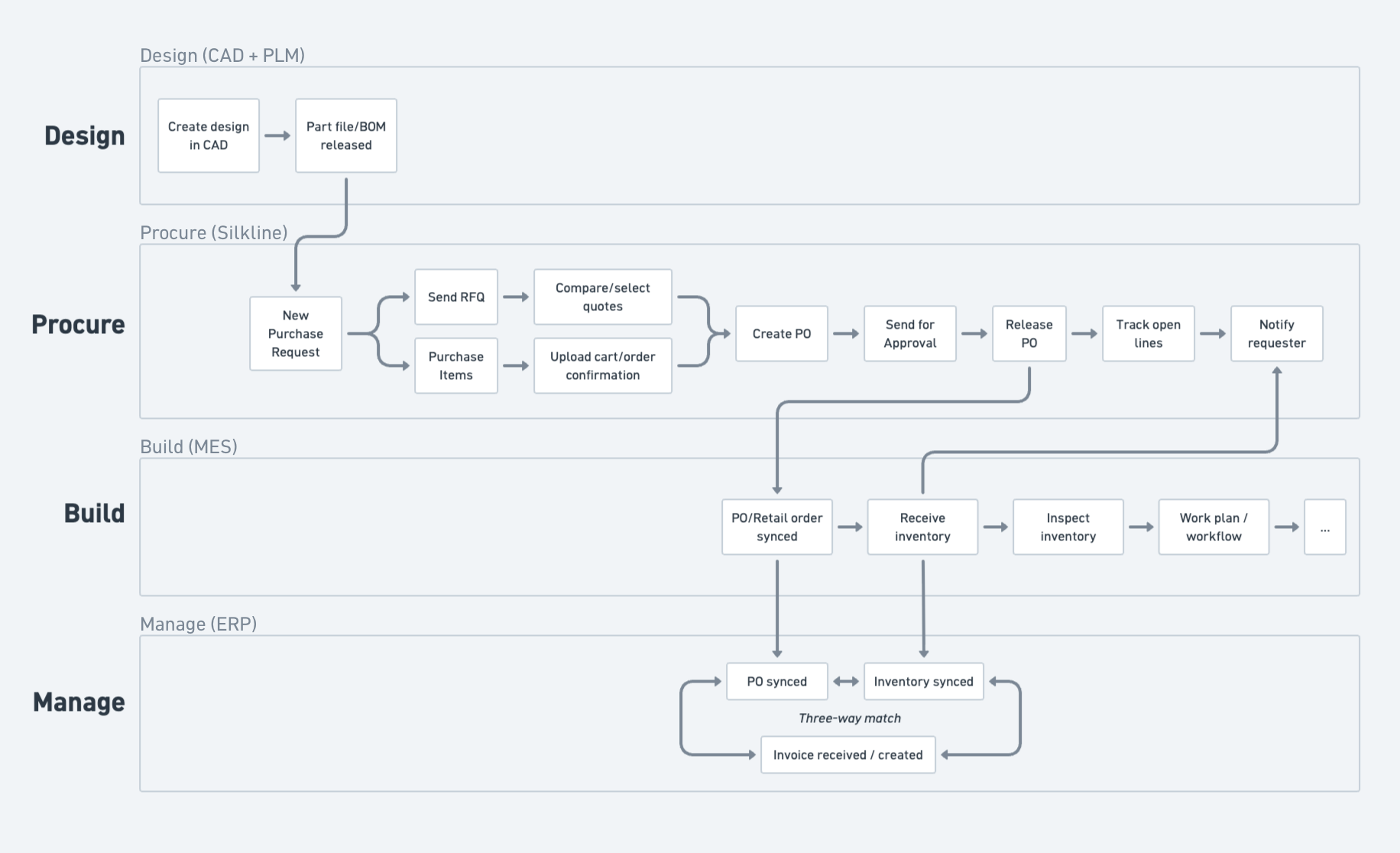
Moving from manual emails and PDFs toward integrated supply chain software reduces human error and creates the traceability required for regulatory compliance (AS9100, NQA-1, etc.).
Quality and procurement functions often operate in silos, but AI in supply chain applications can bridge these gaps. Digital collection of certificates of conformance—rather than paper copies in shipping boxes—enables dock-to-stock workflows and consistent audit trails.
- Use platforms that ensure every bidder sees identical scope of work and requirements
- Store compliance documentation as metadata attached to serial numbers throughout the product lifecycle
- Implement AI-powered review of tolerance data against requirements to flag non-conformances automatically
Build Transparent Communication Channels for Problem-Solving
Communication breakdowns occur most frequently when things go wrong when transparency matters most. Creating systems where bad news travels fast protects relationships and schedules.
The worst position for anyone in the supply chain is being in the dark. Suppliers who communicate proactively during delays earn more trust than those who deliver perfect parts late without warning. Procurement orchestration platforms that include all stakeholders — buyers, engineers, and supplier teams — eliminate the "telephone game" that causes information loss.
- Include engineering and quality personnel on RFQ communications from the start
- Share target pricing and actual requirements upfront, even when conversations feel uncomfortable
- Ask hard questions during supplier onboarding. Partners should be prepared to answer them
"There's never a time I need you to be more communicative than when things are going south. The worst place anybody up the chain can be in is in the dark." — Chip Jameson, Northwest Production Source
How to Put These Insights Into Practice
Advanced manufacturing teams can implement these strategies immediately to strengthen their supply base:
- Audit your current make vs. buy decisions against IP protection and iteration requirements, not just cost and lead time metrics.
- Map your documentation workflows to identify where paper processes create bottlenecks. Prioritize digitizing certificate of conformance collection.
- Evaluate suppliers on adaptability by asking about their technology adoption plans and willingness to invest in new capabilities.
- Create lightweight procurement processes that engineers can follow without bypassing the system. Make compliance the path of least resistance.
- Establish communication protocols that require proactive updates during delays, not just on-time delivery confirmations.
- Implement supply chain orchestration tools that give all stakeholders visibility into the same information simultaneously.
Building Resilient Supply Chains for Advanced Manufacturing
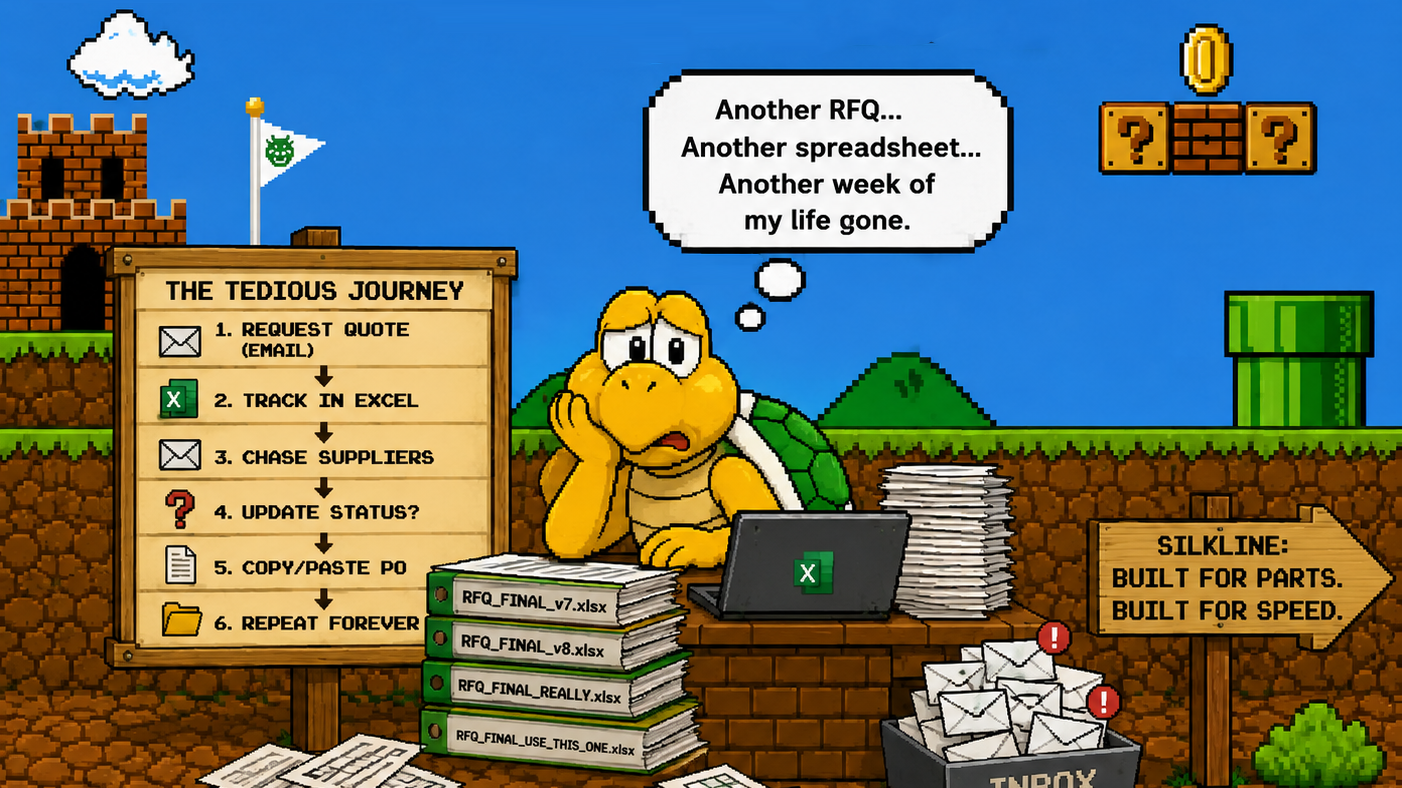
The shift from fragile, efficiency-optimized supply chains to resilient, collaboration-driven networks represents a fundamental rearchitecting of how advanced manufacturing operates. Companies that invest in supplier collaboration software, automate compliance workflows, and build transparent partnerships will outperform those clinging to spreadsheets and email-based procurement.
As geopolitical tensions, tariffs, and supply volatility continue reshaping the landscape, the manufacturers who treat suppliers as true partners — sharing context, communicating proactively, and investing in mutual growth — are building the competitive advantage that matters most: predictable, high-quality supply chains that can adapt to whatever comes next.
Ready to transform how your team connects and collaborates with suppliers? Explore how supply chain orchestration can reduce manual processes and strengthen your supplier relationships.
About Silkline
Silkline is the supply chain orchestration platform that advanced manufacturing companies use to collaborate with suppliers; track requests, RFQs, quotes, and orders; and monitor team and vendor performance. Our technology sets the standard for how OEMs engage their supply base and is the connective layer for hard tech supply chains. Hundreds of advanced manufacturers use Silkline to operate more efficiently and speed up time to revenue. The company is headquartered in Chicago, IL. For additional information, visit https://www.silkline.ai.
© 2026 Silkline, Inc. All rights reserved. Silkline and the Silkline logo are trademarks of Silkline, Inc. All other brand and product names are trademarks or registered trademarks of their respective holders.